What Should I Do With My Furniture When I Move Out of The Villages?
Key Takeaways
- Use the turnkey advantage. Many Villages homes sell fully furnished, so your furniture can become part of the sale instead of a moving expense
- Measure first. Get the floor plan of your new home before you decide what to keep, because a piece that does not fit is not worth moving
- Four piles, one pass. Sort every room into keep, sell, donate, and toss, and be honest about what you will actually use
- Sell locally, donate the rest. Consignment shops and thrift stores around Marion, Sumter, and Lake counties take most of what you leave behind
Start by letting The Villages' turnkey culture work for you: many homes here sell fully furnished, so your furniture can become part of the sale instead of a moving expense. For everything you keep or leave behind, the process comes down to four piles: keep, sell, donate, and toss. I am Lili Whittington, Broker Associate with Soundings LLC (Florida license BK3090328), your bilingual Villages realtor, and after more than 20 years and over 450 homes sold across Marion, Sumter, and Lake counties, I have watched hundreds of families sort through this exact question on the way out of Florida.
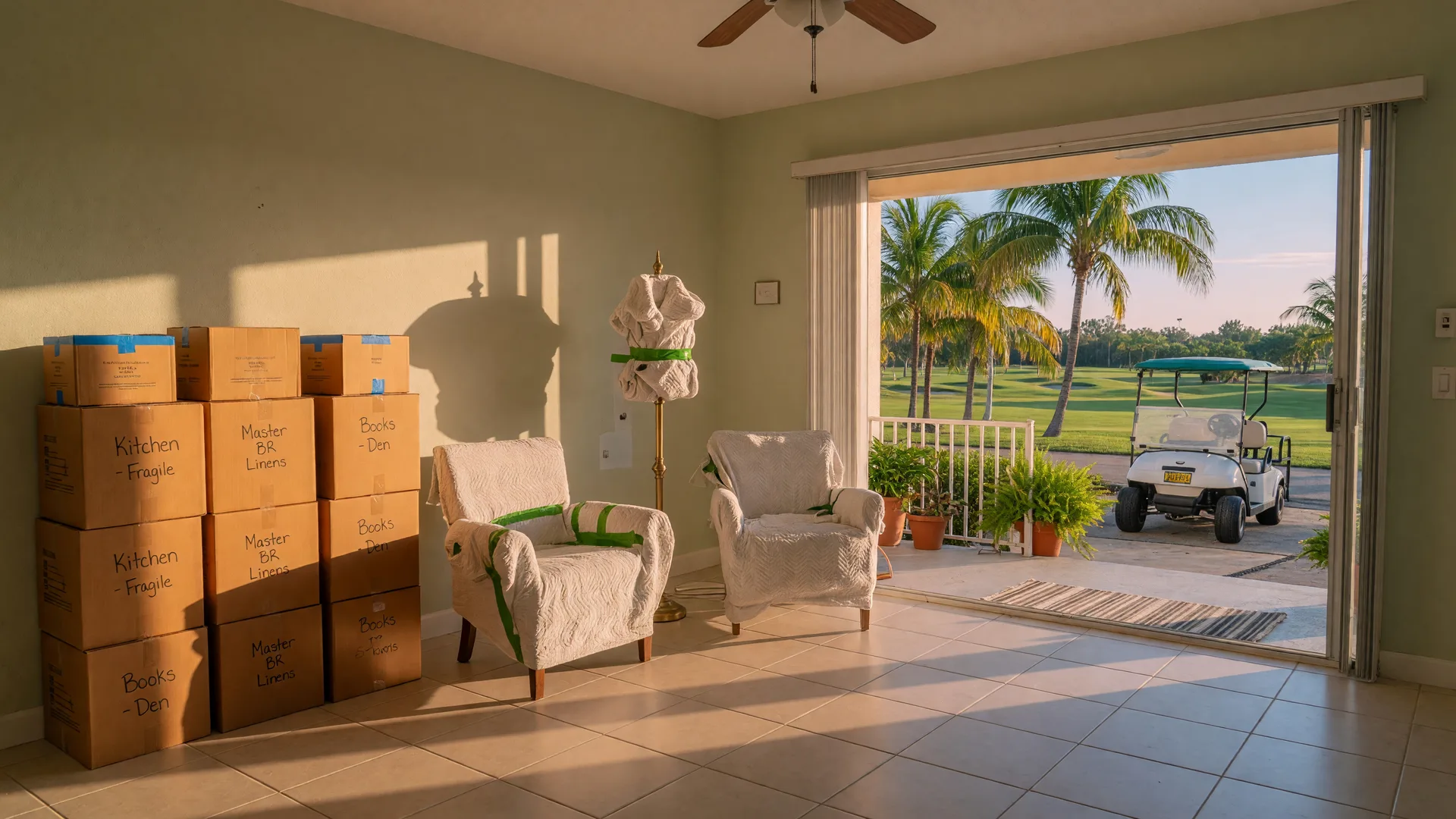
Moving out of The Villages is different from moving out of most places, because the community has a strong tradition of selling homes fully furnished or turnkey. Buyers in a 55+ community often want to walk into a finished home without the hassle and expense of furnishing it, which means your furniture is not just clutter to clear. It can be a real asset in your sale. This guide walks you through the smart order of operations: decide what stays with the house, what fits your new home, what is worth selling, and what to donate, with a timeline that keeps the last weeks calm.
Start With the Turnkey Advantage
Before you book a mover or rent a truck, ask one question: does your furniture add value to the sale? In The Villages, many homes are listed and sold fully furnished, and many buyers specifically search for turnkey properties because they want to avoid the cost and effort of moving or buying furniture. Turnkey homes tend to sell faster, and a well-furnished home photographs beautifully and shows better than an empty one. If you are selling, leaving quality furniture can be a genuine selling point, and it saves you the expense of shipping it hundreds or thousands of miles.
What stays and what goes is negotiable. Some sellers include everything but personal items; others keep the pieces they love and leave the rest. Your listing agent can help you decide what to include based on what buyers in your price range expect, and furniture can be written into the offer so there is no confusion at closing. The Villages has no traditional HOA, and the amenities fee runs with the property rather than the person, so the sale itself is straightforward: the buyer assumes the fee at closing. I explain that in my guide to what happens to the amenities fee when you move out.
Measure Your New Home Before You Decide What to Keep
The biggest mistake I see is deciding what to keep before knowing what fits. Get the floor plan of your new home, and measure the rooms, doorways, and garage before you sort a single drawer. Homes in The Villages are single-story, so stairs are rarely a problem, but room sizes vary a lot by the era of construction, and a formal dining set that filled a 2,500-square-foot villa may overwhelm a 1,600-square-foot cottage. Make a list of the pieces you love, check each one against the new floor plan, and be honest: if a piece does not fit, it does not matter how much you love it.
This is also the moment to think about what your new chapter actually needs. If you are moving to be closer to family, or downsizing to a smaller home, most people discover they use a fraction of what they own. The keep pile should be built around daily life, not memory. Sentimental items, family photos, and heirlooms always travel with you; the question is whether the heavy furniture does.
The Four Piles: Keep, Sell, Donate, Toss
Go room by room, and make four piles. Keep: pieces you love, that fit the new floor plan, and that you will actually use. Sell: good-condition furniture, tools, collectibles, and anything with resale value you do not plan to keep. Donate: usable items you do not want to sell. Toss: worn mattresses, broken electronics, and anything you would not want to receive. Do not skip the toss pile. The goal of moving out of The Villages is to move less, not more, and every item you let go is one less box to pack and one less dollar of moving cost.
If you are selling your home, remember that whatever stays with the house should be clean, coordinated, and presented as part of the lifestyle. A furnished home in The Villages sells a vision of easy living, and that is exactly what most buyers here are looking for. If you are keeping the home and renting it out, the same logic applies: a furnished rental is often easier to lease in this community.
Selling Your Furniture and Belongings Locally
For the sell pile, consignment is the classic route in this part of Central Florida. Real local options include Furniture Barn Consignments in Fruitland Park, Marie Rose Fine Consignments in Summerfield, and Bargains & Treasures in Oxford, all within a short drive of The Villages. Online marketplaces work well too, especially for golf carts, tools, and collectibles, and community garage sales run throughout the year.
Set your expectations before you start: furniture rarely brings retail prices on the resale market. Price to sell, take reasonable offers, and let things go. The goal is not to maximize every dollar, it is to clear your home smoothly and put a little money back in your pocket. For anything that does not sell in a few weeks, move it to the donate pile rather than holding a garage sale forever.
Donating What's Left
Donating is often faster and easier than selling, and it does real good in the community. The Hospice of Marion County thrift store in Summerfield and the Goodwill store in Oxford are real local drop-off options, and some charities offer pickup for larger items, which is a lifesaver for furniture. Donations may qualify for a tax deduction, so ask for a receipt and keep a simple list of what you gave.
A practical note: donate in batches as you declutter, not all in the final week. Charities have limited storage, and a single truckload arriving the day before your move is harder to place than a few carloads spread over a month. Start the donate pile early and keep it moving.
What to Ship, What to Leave Behind
For the keep pile, run a simple test on every large piece: compare the cost of moving it against the cost of replacing it. Large, heavy, low-value furniture is rarely worth shipping across the country, and most households that move far end up shipping a fraction of what they own. Sentimental items, family photos, important documents, and heirlooms travel with you, not in the truck, and anything irreplaceable should go in the car.
When you book a mover, get written quotes from more than one company and read the fine print on insurance and delivery dates. If you are moving a car, that is a separate decision from the household goods, and it is worth planning early. And do not forget your golf cart: it is a personal asset, not part of the home sale, so you can sell it, take it, or trade it in. I cover the options and the Florida cart law in my guide to moving your golf cart out of The Villages.
A Simple Timeline for the Move
Two to three months out: measure the new home, start the four piles room by room, and decide with your agent what furniture stays with the house. One month out: call consignment shops and schedule pickups or deliveries, arrange donation drop-offs, and book your mover. Two weeks out: pack the keep pile, transfer utilities, and confirm your closing date. Moving week: keep a suitcase of essentials with you, and let the professionals handle the rest.
The whole process is easier when the house is sold or under contract first, because you know exactly what the buyer wants to keep. If you have not decided whether to sell or rent, my guide to preparing your home before moving out of The Villages walks through that decision, and my article on selling and moving back north covers the financial side of the sale.
FAQ About Furniture and Belongings When Moving Out
Should I leave my furniture in the house when I sell in The Villages?
Often yes. Many homes in The Villages sell fully furnished or turnkey, and many buyers expect it, especially in a 55+ community where buyers want to avoid the hassle and expense of furnishing a new home. Leaving quality furniture can make your home more attractive and help it sell faster, and it saves you the cost of moving it. Work with your listing agent to decide what stays and how it is reflected in the price.
Is it worth selling my furniture before I move out of The Villages?
Yes for pieces in good condition, but expect modest resale values. Furniture rarely brings retail prices on the resale market, so compare what you would net against the cost of moving the piece. Consignment shops and online marketplaces are the main local routes, and for most large furniture, selling locally beats paying to ship it.
Where can I donate furniture and household goods in The Villages area?
Local thrift stores and charities serve the area, including the Hospice of Marion County thrift store in Summerfield and the Goodwill store in Oxford, and some charities offer pickup for larger items. Donations may qualify for a tax deduction, so ask for a receipt and keep a list of what you give.
What should I do with my golf cart when I move out of The Villages?
Your golf cart is a personal asset, not part of the home sale. You can sell it, take it with you, or trade it in, and Florida cart law determines whether you can drive it on public roads in your new state. I cover the options, the paperwork, and timing tips in a separate guide on moving your golf cart out of The Villages.
Moving out of The Villages is a big chapter, but the furniture question does not have to be the hard part. Lean on the turnkey culture, measure your new home, and work the four piles, and you will be surprised how much lighter the move feels. I am Lili Whittington, Broker Associate with Soundings LLC (Florida license BK3090328), your bilingual Villages realtor, and with more than 20 years of experience and over 450 homes sold, I help sellers stage, price, and close their Villages home so the move out goes smoothly. Call or text me at 954-235-4766, or book a time on my calendar, and let us plan your exit together.
Related Posts
What Should I Do With My Home Before Moving Out of The Villages?
Sell or rent, declutter, repairs, staging, the amenities fee, and the paperwork.
Seller's GuideWhat Should I Do With My Golf Cart When I Move Out of The Villages?
Sell it, take it, or trade it in: Florida cart law and the paperwork.
Seller's GuideWhat Happens to the Amenities Fee When I Move Out of The Villages?
The fee runs with the property, not the person: buyers assume it at closing.
Seller's GuideCan I Sell My Home in The Villages and Move Back North?
Capital gains, the homestead exemption, timing, and the selling process.

About the Author
Lili Whittington, MBA is a Broker Associate with Soundings LLC in The Villages, FL, licensed as a Florida broker associate (BK3090328). With over 20 years of experience and 450+ homes sold throughout The Villages and Marion, Sumter, and Lake counties, Lili holds the CLHMS, SRES, MRP, ABR, SFR, and CIPS designations and specializes in retirement relocation, luxury homes, and seller representation for local, national, and international clients, fluent in English and Spanish. She helps sellers stage and close their Villages home so the move out goes smoothly, from the turnkey decision to the final walkthrough.
Planning your move out of The Villages?
Get a straight answer about selling your Villages home, what to leave with the house, and how to time the move, from someone who has guided more than 450 homes sold over 20-plus years. Ask Lili anything about selling and moving out of The Villages, in English or Spanish.
Call or text Lili at: 954-235-4766 · Email: Liliana.whittington@soundingsrealestate.com
Book a Consultation With Lili