What Taxes Apply When Moving to The Villages, FL?
Key Takeaways
- Florida has no state income tax. Wages, capital gains, and investment income are not taxed by the state
- Retirement income is state-tax-free. Social Security, pensions, and 401(k) and IRA withdrawals are not taxed by Florida
- The homestead exemption is worth up to about $51,411 off assessed value for 2026, and Save Our Homes caps growth at 3% a year
- The doc stamp tax is $0.70 per $100 of the purchase price on the deed, about $3,500 on a $500,000 home
- The amenities fee is not a tax. No traditional HOA in The Villages; residents pay about $204 a month for the lifestyle
Moving to The Villages means saying goodbye to a state income tax: Florida has no personal income tax, so your Social Security, pension, and 401(k) or IRA withdrawals are not taxed by the state, and your everyday purchases are subject only to sales tax, about 7.5% in Sumter County. The taxes that matter for new residents are the property taxes on your home, the one-time documentary stamp tax at closing, and a small menu of local sales taxes. I am Lili Whittington, Broker Associate with Soundings LLC (Florida license BK3090328, CLHMS, SRES, MRP, ABR, SFR, CIPS), your bilingual Villages realtor, and after more than 20 years and over 450 homes sold across The Villages and Marion, Sumter, and Lake counties, the tax question is usually the first one buyers ask after the amenities fee.
The good news is that Florida's tax structure is genuinely friendly to retirees, and most of it is simple once you know the four or five things that actually apply to you. In this guide I will walk you through what Florida taxes you, what it does not, the homestead exemption and Save Our Homes, the closing costs that come with buying, and the sales tax you will pay at the grocery store and the gas pump. As always, I am a real estate professional, not a CPA, so treat this as the roadmap and let a tax advisor confirm the numbers for your specific situation.
The Short Answer: Florida Has No State Income Tax
Florida is one of the few states with no state personal income tax at all. Wages, capital gains, dividends, and investment income are not taxed by the state of Florida. That single fact reshapes retirement budgets for people arriving from states like New York, New Jersey, Pennsylvania, Ohio, or Illinois, where state income tax takes a real bite out of every paycheck and every RMD. Once you establish Florida residency, no state income tax return is filed for your income, period.
Federal taxes still apply exactly as they always have. Your Social Security, pension, and retirement account withdrawals are subject to federal rules, and for many retirees those federal rules are already favorable: Social Security benefits are often not federally taxed, and much of a pension may not be either depending on your total income. The state-level relief is simply one more layer in your favor. When clients ask me whether they will "pay less tax in Florida," the honest answer is yes on state income taxes, and no change at all on federal taxes.
Your Retirement Income Stays Yours in Florida
Because Florida has no income tax, the state does not tax Social Security benefits, pensions, 401(k) withdrawals, IRA distributions, or annuity payments. Contrast that with the roughly dozen states that tax some retirement income, and you can see why The Villages draws so many snowbirds who decide to make Florida permanent. For a couple collecting two Social Security checks and two required minimum distributions, the annual state tax savings can easily run into the thousands of dollars, every single year.
There is one distinction worth flagging: Florida residency matters for this benefit. Most states look at where you are domiciled, where you are registered to vote, where your driver's license is, and where you spend the majority of the year. If you keep a home in a tax-happy state up north and live in The Villages only part of the year, that other state may still consider you a resident and tax your income. When I work with buyers splitting time between states, I always recommend they get clear, written advice on domicile from their tax professional before they cut ties up north.
Property Taxes: Homestead Exemption and Save Our Homes
Property taxes are the one ongoing tax every Villages homeowner pays, and Florida gives you two powerful protections on your primary residence. The first is the homestead exemption. For 2026, a qualifying primary residence gets $25,000 off its assessed value for all taxes, including school taxes, plus an additional inflation-adjusted exemption of about $26,411 on the value above $50,000 for non-school taxes, for a total exemption of roughly $51,411. On a $400,000 home that means you are taxed on roughly $348,600 of value instead of the full $400,000, which drops your annual bill meaningfully.
The second protection is Save Our Homes. Once your home has the homestead exemption, the assessed value cannot grow more than 3% in a single year, regardless of how hot the market runs. In a community like The Villages, where values have climbed steadily, that cap is what keeps longtime residents' tax bills from ballooning. And there is a third benefit on top: up to $500,000 of your accumulated Save Our Homes savings can be ported to a new Florida home if you move within the state. To claim all of it, you apply with the county property appraiser by March 1 after closing, and the exemption takes effect the following tax year in most cases. Florida voters will also decide a ballot measure this November that could significantly increase the homestead exemption starting in 2027, so this is worth watching if you are buying soon.
The Documentary Stamp Tax on Your Purchase
At closing, the most visible tax for a buyer is Florida's documentary stamp tax on the deed. The rate is $0.70 per $100 of the total purchase price, with no cap, in every county except Miami-Dade. On a $500,000 home in The Villages, that is about $3,500. On a $300,000 courtyard villa, it is about $2,100. Mortgage documents are taxed separately at a different rate, and your title company will itemize every line on your closing statement, so there are no surprises if you read it line by line.
Because the doc stamp tax is a percentage of price, it is part of the reason buyers ask me about the range of homes in their budget: every step up in price has a real, one-time tax attached. It also makes the difference between new construction and resale interesting, because the tax applies to whatever final price you negotiate. I cover that choice in detail in my guide to buying new or resale.
Sales Tax in Marion, Sumter, and Lake Counties
On everyday purchases, Florida levies a 6% state sales tax, and each county adds its own local surtax. In Sumter County, where most of The Villages sits, the combined rate is 7.5%. In Marion County, it is also 7.5%, and in Lake County it is 7.0%. So a weekly grocery run, a new set of golf clubs, and a restaurant dinner all carry roughly an extra penny or two on the dollar compared with the state minimum.
Two things soften that. Groceries sold for home consumption are generally exempt from Florida sales tax, and so are most prescription drugs and over-the-counter medicines. So the day-to-day essentials that dominate a retirement budget often escape sales tax entirely, while taxable purchases like dining out, clothing, and electronics carry the county rate. It is a small line item, but it is worth knowing before you budget the first year of Florida living.
One Fee That Is Not a Tax: The Amenities Fee
Buyers sometimes confuse the monthly amenities fee with a tax, so let me be direct: The Villages has no traditional HOA, and the amenities fee is not a property tax. Residents pay about $204 a month for new buyers in 2026, and that single fee funds the recreation centers, pools, fitness rooms, the executive golf courses, and the town squares. It is a contractual fee tied to the deed, it transfers to the next owner at closing, and it is prorated on your closing statement like property taxes are, which is probably why the confusion happens.
Surrounding communities outside The Villages often do have traditional HOAs with their own dues and rules, so the amenity model here is genuinely different. If you are comparing a home inside The Villages with one just outside, add both the amenities fee and a realistic property tax estimate to each side of the ledger and the comparison gets much clearer. My breakdown of what the amenities fee covers goes through all of it, and my cost of living guide stacks it against every other budget line.
A Quick Tax Checklist Before You Move
Here is the checklist I give every relocating buyer. First, get written advice from a CPA about establishing Florida domicile, because your old state may want its slice if you keep residency there. Second, after you close, apply for the homestead exemption with the county property appraiser before March 1, and do it every year until it is on the roll. Third, budget the doc stamp tax on the deed into your closing costs, roughly $0.70 per $100 of the price. Fourth, expect sales tax around 7.5% in Sumter and Marion counties and 7% in Lake County. And fifth, remember the amenities fee is a fee, not a tax, about $204 a month, with no traditional HOA to manage. That is the whole picture, and every line of it is simple to handle with a good team around you.
If you are planning to move to The Villages, whether from another state or another country, I can help you compare homes, neighborhoods, and all the costs that come with them, in English or Spanish. I have guided more than 450 homes sold over 20-plus years across The Villages and Marion, Sumter, and Lake counties, and I can connect you with the local professionals who make the tax side painless. Call or text me at 954-235-4766, or book a time on my calendar, and let us map out your move together.
FAQ About Taxes When Moving to The Villages, FL
Does Florida tax my pension or Social Security when I move to The Villages?
No. Florida has no state personal income tax, so Social Security benefits, pensions, and 401(k) and IRA withdrawals are not taxed by the state of Florida. Federal tax rules still apply, so have a tax professional confirm your federal picture before you move.
How do I apply for the Florida homestead exemption?
Apply with your county property appraiser after closing, once the home is your permanent residence, with a March 1 deadline to qualify for that tax year. For 2026 the exemption is up to about $51,411 on a qualifying primary residence: $25,000 off assessed value for all taxes plus an additional inflation-adjusted amount for non-school taxes. Save Our Homes then caps assessment growth at 3% a year.
How much is the documentary stamp tax on a home purchase in The Villages?
Florida charges $0.70 per $100 of the total purchase price on the deed, with no cap. On a $500,000 home that is about $3,500. The Villages and all of Sumter County use the standard rate, and mortgage documents are taxed separately.
Is the monthly amenities fee a tax or an HOA fee?
Neither. The Villages has no traditional HOA. Residents pay an amenities fee of about $204 a month for new buyers in 2026 that covers recreation centers, pools, golf, and the town squares. It is a contractual fee tied to the deed and prorated at closing, but it is not a property tax and not HOA dues.
Your move to The Villages can be wonderfully simple on the tax side, and knowing the few numbers that matter makes the whole process feel lighter. I am Lili Whittington, Broker Associate with Soundings LLC (Florida license BK3090328), your bilingual Villages realtor, and I help buyers in English and Spanish across The Villages and Marion, Sumter, and Lake counties. Call or text me at 954-235-4766, or book a time on my calendar, and we will plan your move together.
Related Posts
What Taxes Apply When You Move Out of Florida and Back North?
The other side of the coin: what you pay when you leave Florida.
Financial GuideThe True Cost of Living in The Villages, FL: A Complete Breakdown
Housing, amenities fees, property taxes, insurance, and utilities.
Relocation GuideDoes The Villages Have an HOA? What the Amenities Fee Covers
The no-HOA model and what the $204 monthly fee pays for.
Buyer's GuideNew or Resale in The Villages? How to Choose the Right Home
Prices, build timelines, and which choice fits your life.
About the Author
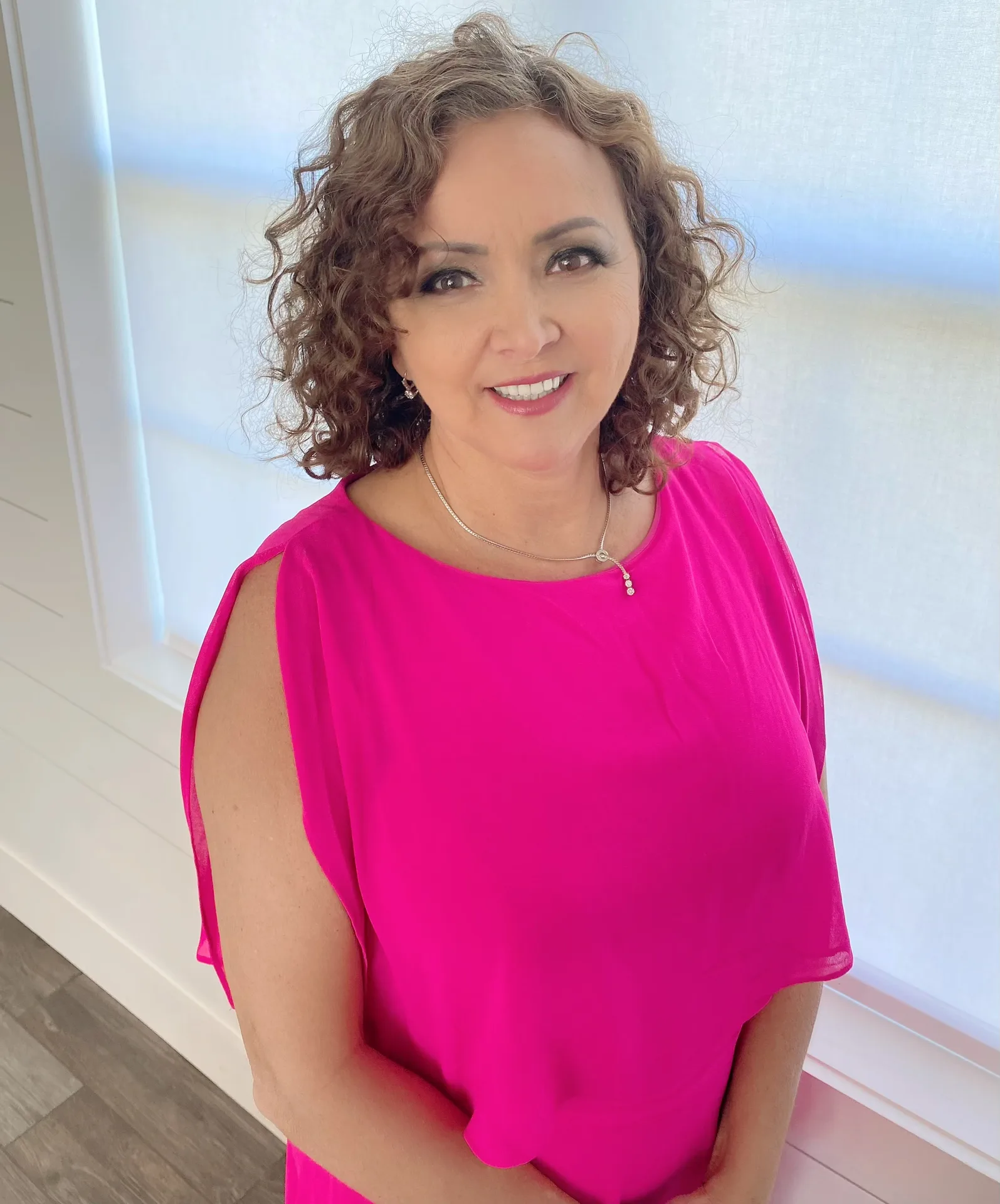
Lili Whittington, MBA is a Broker Associate with Soundings LLC in The Villages, FL, licensed as a Florida broker associate (BK3090328). With over 20 years of experience and 450+ homes sold throughout The Villages and Marion, Sumter, and Lake counties, Lili holds the CLHMS, SRES, MRP, ABR, SFR, and CIPS designations and specializes in retirement relocation, luxury homes, and buyer representation for local, national, and international clients, fluent in English and Spanish. She helps every buyer plan the financial side of the move, from closing costs to the amenities fee, so the first year in Florida goes smoothly.
Planning your move to The Villages?
Get a clear, straight answer about buying a home, the taxes that come with it, and what the amenities fee really covers, from someone who has guided more than 450 homes sold over 20-plus years. Ask Lili anything about the buying process, in English or Spanish.
Call or text Lili at: 954-235-4766 · Email: Liliana.whittington@soundingsrealestate.com
Book a Consultation With Lili