Moving from the Northeast to The Villages, FL: What You Need to Know
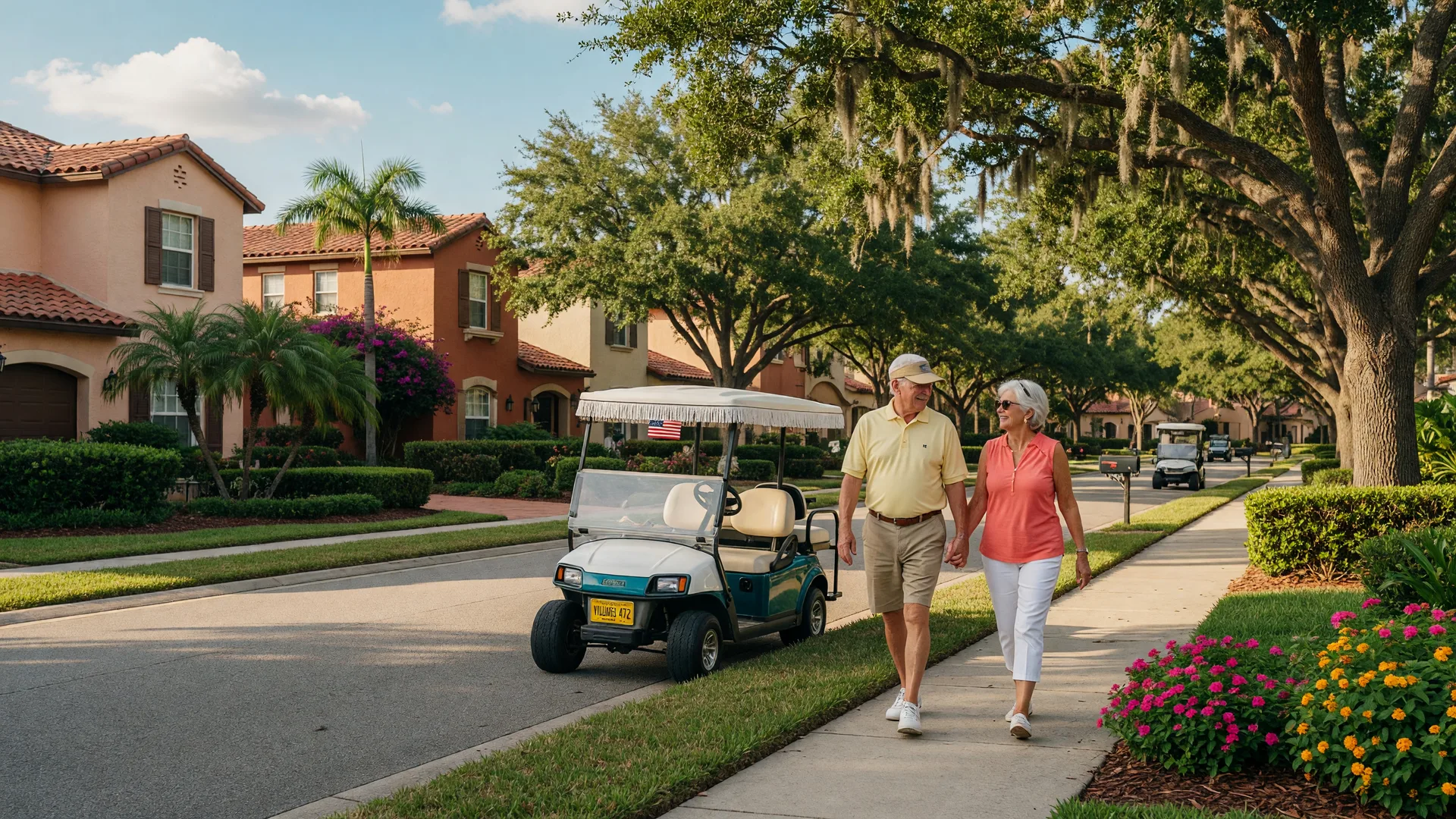
Quick Facts: Northeast to The Villages
- Cost savings: Typical couples save $1,000-$1,500/month vs. comparable NY/NJ lifestyle
- No state income tax — Social Security, pensions, and IRA withdrawals keep more of your money
- Year-round golf on 42 executive courses, free for residents
- 400+ miles of golf cart paths — no parallel parking needed
- 3,500+ clubs and activities — a new social life awaits
I have helped hundreds of buyers make the move from the Northeast to The Villages. New York, New Jersey, Pennsylvania, Connecticut, Massachusetts, Rhode Island — I have walked through the process with families and retirees from every one of those states, and I have seen the same emotions play out again and again: excitement about the lifestyle, anxiety about the unknowns, and relief when they realize how much easier life becomes here.
This guide is written for you if you are considering that move. It covers everything from taxes and healthcare to what you will miss about the Northeast and what will make you wonder why you did not move sooner. I have been serving this community for over 20 years and I know the questions that keep coming up. Let me answer them all here.
1. Why The Villages Is the #1 Destination for Northeast Transplants
Walk into any town square in The Villages on a Saturday night and you will hear accents from all over the Northeast. The Villages has one of the highest concentrations of former northeast residents of any community in Florida. Statistically, New York and New Jersey consistently rank among the top states that new residents are moving from.
This is not an accident. The Villages offers what northeast retirees are looking for: an active, social, maintenance-free lifestyle in a warm climate, at a fraction of the cost of staying put. The community is designed so that you can build a full social life without ever leaving its borders, and for people leaving behind decades of friends and family, that built-in community is a lifeline.
When you move here, you will find neighbors who understand where you came from. You will meet people at the recreation center who grew up two towns over from your old house. That familiarity matters. It makes the transition faster and the loneliness shorter.
2. Weather Adjustment
This is the single biggest lifestyle change. Moving from a Northeast winter to Florida's subtropical climate is a shift that affects everything from your wardrobe to your daily routine to your energy bills.
Summer (June through September) is hot and humid. High temperatures average in the low 90s, but the humidity pushes the heat index well into the triple digits. If you are used to New England summers where 85 degrees is a heat wave, this will take some adjustment. The key is to adapt your schedule: morning golf, pool time, indoor activities during peak afternoon heat, and evening socializing when the temperature drops.
The good news is that almost everything in The Villages is air conditioned, and the community was built with the climate in mind. The recreation centers, pools, and town square shops are all designed with covered walkways and shaded areas. After the first summer you will acclimate. Your blood thins out, as the locals say.
Winter (December through February) is why people move here. Average highs in the upper 60s to low 70s. A few nights dip into the 40s. You will wear a light jacket in the morning and shed it by noon. There is no snow, no ice, no scraping windshields, no frozen pipes. The golf courses stay open year-round. The town squares are full of people eating dinner outside in January.
Hurricane season runs from June 1 to November 30. The Villages sits roughly 70 miles inland from either coast, so the direct hurricane risk is lower than in coastal communities. Most storms weaken significantly by the time they reach Central Florida. That said, you should be prepared: have a basic emergency kit, know your evacuation zone (most of The Villages is Zone D or E), and understand your insurance coverage. I cover insurance in more detail in my cost of living guide.
Some people love the weather immediately. Others miss the seasons. That is normal. Most of my clients tell me that after their first full winter here, they never look back.
3. Cost of Living Comparison
The financial case for moving from the Northeast to The Villages is strong. Let me put some real numbers on it.
Housing: The median home price in The Villages is around $390,000 as of mid-2026. That same home in a New York suburb would cost $550,000 to $750,000. In New Jersey, $450,000 to $650,000. In Fairfield County, Connecticut, you are looking at $600,000 to $900,000 for a comparable home. Your dollar goes significantly further here.
Property taxes: Florida's property taxes are moderate. On a $390,000 home in Sumter County with the homestead exemption, you pay roughly $4,100 to $4,600 per year. In New Jersey, the same home value would carry $7,000 to $10,000 in annual property taxes. In New York's Westchester or Long Island, you could see $10,000 to $15,000. This is a savings of $400 to $800 per month right off the top.
State income tax: This is the biggest difference. Florida has no state income tax. If you are drawing $60,000 per year from Social Security, a pension, and retirement accounts, you save $3,000 to $8,000 per year compared to what you would pay in New York, New Jersey, Connecticut, or Pennsylvania. If your income is $100,000, the savings can exceed $10,000 annually.
Insurance: Homeowners insurance in Florida is higher than in the Northeast. Expect $2,000 to $3,600 per year for a single-family home, compared to $800 to $1,200 in the Northeast. Auto insurance is also higher, typically $1,200 to $2,200 per year. These increases partially offset your other savings, but the net financial picture still favors Florida by a wide margin.
Everyday costs: Dining out, entertainment, and utilities are comparable or slightly lower than the Northeast. The free golf, free live music, and affordable club memberships mean your entertainment dollar goes much further here. Utility costs are higher in summer (A/C) and lower in winter (no heating bills), netting out roughly even.
The bottom line: A couple living comfortably in a $390,000 paid-off home in The Villages saves $1,000 to $1,500 per month compared to an equivalent lifestyle in New York or New Jersey, and roughly $500 to $800 per month compared to Pennsylvania. For a more detailed breakdown, see our complete cost of living guide.
4. What to Sell, What to Bring, What to Leave
One of the hardest parts of any long-distance move is deciding what comes with you. Northeast furniture brings a particular challenge: many homes in that region are built with larger rooms and higher ceilings. Florida homes, even in The Villages, tend to have more modest room sizes. Your oversized sectional, your formal dining set that seats twelve, your massive colonial-era armoire — these may not fit into a Florida patio villa or even a standard single-family home.
Sell: Large formal furniture, heavy drapes, wool rugs, snowblowers, winter tires, snow shovels, heavy winter coats, bulky exercise equipment (Florida homes rarely have dedicated workout rooms), and anything that does not bring you joy. A downsizing or estate sale company can handle this for you, and you will be surprised how liberating it feels.
Bring: Sentimental items, artwork, family photographs, your bed (if you love it), small tables, lamps, outdoor furniture that suits a warm climate, golf clubs, your car, and any kitchen items you are attached to. Small items that carry memories are worth their weight in the moving truck. Large items that could be replaced are not.
Leave: Buy new in Florida. Many of my clients arrive with nothing but their clothes, their golf clubs, and their car, and they furnish their home here over the first few weeks. The Villages has multiple furniture stores, and Orlando with its full selection of home goods stores is 45 minutes away. There is something freeing about starting fresh with furniture that is the right scale for your Florida home.
A practical tip: if you are moving in the summer, the movers will be working in the heat. Make sure your new home's air conditioning is running before they arrive. And if you are moving from a multistory home in the Northeast to a single-story home in The Villages, you will find that the stairs were something you did not realize you hated until they were gone.
5. Healthcare Transition
Transferring your healthcare from one state to another is one of the most important and most overlooked parts of the moving process. Here is what you need to know.
Medical records: Request your medical records from your current providers at least one month before you move. Most hospitals and practices now offer online portals where you can download your complete record. If you are on Medicare, your records follow you; you just need to find new providers who accept Medicare assignment.
Finding new doctors: The Villages has excellent healthcare infrastructure for its size. UF Health Spanish Plaines Hospital is a full-service 307-bed acute-care facility right on El Camino Real. Cleveland Clinic has outpatient and specialty facilities in the area. AdventHealth operates multiple locations. With such a large Medicare-age population, the area has a high concentration of primary care doctors, cardiologists, orthopedists, and specialists who treat older adults every day.
Medicare considerations: If you are on Original Medicare (Parts A and B), your coverage transfers to Florida seamlessly. If you have a Medicare Advantage plan, check whether your plan has a network in Florida. Many regional plans do not, so you may need to switch to a new plan during the Medicare Open Enrollment period (October 15 to December 7) or during a Special Enrollment Period triggered by your move. Most residents in The Villages choose either a Medigap (Medicare Supplement) plan or a Medicare Advantage plan that serves the Central Florida area.
How Florida compares: The quality of healthcare in The Villages area is comparable to what you would find in suburban Northeast communities. The concentration of specialists who work with older adults is actually higher here because the population density of Medicare-age patients is so high. Wait times for appointments are generally short. The one difference: during hurricane season, elective procedures may be rescheduled if a storm threatens, but this is a minor inconvenience rather than a systemic issue.
6. Social Adjustment
This is the part of the move that people underestimate the most. Leaving behind friends, family, book clubs, dinner groups, and the comfortable rhythm of a social life built over decades is genuinely hard. I have worked with clients who cried during the moving process, not because they regretted their decision, but because saying goodbye is painful.
The good news is that The Villages was designed to solve this exact problem. With more than 3,500 resident-run clubs, every activity you can imagine is represented: golf leagues, pickleball tournaments, book clubs, photography groups, woodworking shops, wine tasting circles, dance classes, and hundreds more. The three town squares host live music seven nights a week. The recreation centers are gathering places where you will meet neighbors just by showing up.
My advice: in your first month, say yes to everything. Join a club even if you are not sure about it. Sit at the community table at the town square. Introduce yourself to your neighbors. Take a class at the recreation center. The social structure here makes it easy to build a new network, but you have to put yourself out there. I have seen people who were worried about being lonely become the social chairs of their neighborhood within six months.
And technology helps. FaceTime and Zoom keep you connected to your kids, grandkids, and old friends. Many residents plan an annual trip back north to visit and have their family visit them in Florida for a week each winter. That rhythm of connection works well for most people.
7. Tax Implications
The tax advantages of moving to Florida are significant, but they come with planning requirements that you should understand before the move.
No state income tax: This is the headline benefit. Florida has no state personal income tax. That means your Social Security benefits, pension income, 401(k) and IRA distributions, and capital gains are all free from state taxation. For a couple with $80,000 in retirement income, that saves $4,000 to $6,000 per year compared to New York, and $2,000 to $4,000 compared to Pennsylvania.
Residency requirements: To claim Florida residency and avoid paying income tax to your former state, you need to demonstrate that Florida is your primary residence. This means spending more than 183 days per year in Florida, obtaining a Florida driver's license, registering to vote in Florida, and updating your address with the IRS, Social Security Administration, and your financial institutions. You must also establish a Florida homestead exemption on your primary residence.
Homestead exemption: Once you establish Florida residency, file for the homestead exemption on your primary residence. This exempts the first $50,000 of your home's assessed value from property taxes (except school taxes). For a $390,000 home, this saves roughly $600 to $800 per year. The exemption also caps annual assessment increases at 3% under the Save Our Homes amendment, which protects you from large tax increases as property values rise.
Property taxes: As discussed in Section 3, property taxes in The Villages are moderate. Sumter County has the lowest millage rate within The Villages, at roughly 12.28 mills. Marion and Lake counties are slightly higher. Even with the higher homeowners insurance costs, the total tax and insurance burden in Florida is typically lower than in the Northeast.
Estate and inheritance taxes: Florida has no state estate tax and no state inheritance tax. Several Northeast states (New York, Connecticut, Pennsylvania, New Jersey) have some form of estate or inheritance tax. This can be a significant consideration if you are planning your legacy.
Sales tax: Florida's state sales tax is 6%, with local options that bring it to 7.5% or 8% in some areas (Sumter County is 7.5%). This is comparable to or slightly lower than most Northeast states.
8. Driving and Transportation
If you are coming from the Northeast, the driving culture in The Villages will feel like a different world. In a good way.
No commuting traffic jams. No aggressive driving. No parallel parking. No circling the block for a parking spot. The widest roads you have ever seen. Traffic lights that cycle in reasonable time. And everywhere, everywhere, golf carts.
The Villages has over 100 miles of multi-modal paths that connect every village to every other village. You can drive your golf cart from your home to any town square, any recreation center, any shopping center, and most medical offices. Many residents drive their cars so infrequently that they fill up the gas tank once every two to three weeks.
Golf cart rules: Golf carts can travel on designated cart paths and on roads with speed limits of 30 mph or less when crossing. Street-legal carts (with headlights, turn signals, seat belts, and a license plate) can use higher-speed roads. No drunk driving laws apply to golf carts the same way they do to cars, and the town squares fill up with parked carts every evening.
For your car: You will need to get a Florida driver's license within 30 days of establishing residency. There is no parallel parking test on the Florida driving exam. You will also need to register your vehicle and get a Florida license plate. The process is straightforward and can be done at any Sumter, Marion, or Lake county tax collector's office.
One thing that surprises northeast transplants: Floridians drive slowly in the rain. This is not timidity, it is wisdom. When the rain first hits after a dry spell, the roads are slick with oil residue, and hydroplaning is a real risk. Give yourself extra time on rainy days.
9. Family and Visiting Guests
One of the biggest concerns I hear from northeast buyers is about distance from family. You will be far from your children and grandchildren. That is hard. But The Villages is surprisingly well positioned for hosting visitors.
Guest accommodations: Many Villages homes have a dedicated guest bedroom and guest bath. For larger family gatherings, the community is full of vacation rentals that your family can book for their visits. The Village of Fenney, for example, has many homes with a separate guest suite. If you anticipate frequent guests, look for homes with a split floor plan that gives visitors privacy.
Nearby attractions for guests: Your family will want to visit you, and when they do, they have plenty to do. Orlando theme parks (Disney World, Universal Studios, SeaWorld) are about 75 minutes away. Gulf Coast beaches (Clearwater, Siesta Key, St. Pete Beach) are 90 to 120 minutes. Crystal River and Homosassa Springs are less than an hour away for manatee tours and nature parks. Your grandkids will be excited to visit Gramma and Grampa in Florida.
Air travel: Orlando International Airport (MCO) is the main gateway, about 75 minutes from The Villages. Orlando Sanford (SFB) is about 60 minutes and serves Allegiant Air with direct flights from many northeastern cities. Tampa International (TPA) is about 90 minutes. Your family can fly in easily, and you can make the airport run in a comfortable car with their luggage.
Many of my clients tell me that their relationship with their adult children actually improves after the move. Instead of brief visits squeezed into busy weekends, their family comes to Florida for a full week of vacation time, with real quality time that the old dynamic did not allow.
10. What Northeast Transplants Miss Most
Let me be honest with you. Not everything is better in Florida, and pretending otherwise would not help you prepare. Here is what most of my northeast clients tell me they miss:
Good pizza and bagels. This is the number one answer, every time. Florida has plenty of pizza places, but the water is different, the dough is different, and the bakeries do not make real bagels the way you remember from New York, New Jersey, or Montreal. You will find acceptable substitutes, but you will miss the real thing.
Seasons. Some people adjust to year-round warmth immediately and never miss fall foliage or the first snow. Others find the lack of seasonal rhythm disorienting. If you are someone who looks forward to changing leaves, cozy sweaters, and the first crisp day of autumn, you will feel that absence.
Proximity to family. No amount of FaceTime calls replaces being able to drive an hour for a Sunday dinner or a grandchild's soccer game. This is the hardest tradeoff, and I will not sugarcoat it. The distance is real. The upside is that when you do see your family, it is often for extended, quality time.
Familiar restaurants and chains. If your Friday night ritual involved a specific Italian deli or Chinese takeout place, you will not find the exact counterpart here. What you will find are new favorites. The three town squares have dozens of dining options, and the variety keeps growing.
The pace of life. The Northeast has an energy that some people love. The hustle, the urgency, the sense that things are happening. The Villages is slower. That is a feature for most people, but if you thrived on the energy of Manhattan or downtown Boston, the adjustment can feel strange at first.
11. What Northeast Transplants Love Most
And now the good stuff. Here is what my clients tell me they love most after the move:
No shoveling snow. This sounds trivial until you have lived through one more winter of scraping ice off your windshield at 6 AM. Every single client mentions this as a top benefit. The first January morning you step outside in a light jacket and drive your golf cart to breakfast, you will understand.
No road salt on your car. Your car does not rust out in five years. You do not need winter tires. You wash it in January and it stays clean for more than an hour.
Year-round golf. The 42 executive courses in The Villages are free for residents and open 365 days a year. You can play on Christmas morning if you want to. The championship courses are a small annual fee. For golfers, this is paradise.
No state income tax. Every April 15, when your neighbors in New York are writing checks to the state, you will feel a quiet satisfaction that most people never get to feel.
Friendly neighbors. The Villages attracts people who are choosing to be here. They moved to enjoy life, and that positive energy shows. Neighbors wave hello. People stop to chat. The community is genuinely welcoming in a way that surprised me even after 20 years here.
Town square entertainment. Live music seven nights a week, free of charge. Dancing under the stars. A different band every night. This is the social fabric of The Villages, and there is nothing quite like it anywhere else.
Lower housing costs. The same budget that bought a fixer-upper in the Northeast buys a beautiful, move-in-ready home here. Your dollar goes further, and the quality of construction is often better because there is no basement, no freezing winters, and no old Victorian plumbing.
12. Making the Move Checklist
Here is the step-by-step process I recommend to every buyer moving from the Northeast. Follow this and you will not miss a critical step.
Three to Six Months Before the Move
- Research villages — each village has a different character, price range, and amenity access. Spend time on this site exploring your options.
- Visit for a week — stay in a vacation rental, explore town squares, play a round of golf, talk to residents. Get the feel of daily life.
- Find a realtor — work with someone who knows The Villages market inside and out. Call Lili Whittington at 954-235-4766 to get started.
- Get pre-approved — if you need financing, start the process early. Florida lenders understand The Villages market better than out-of-state banks.
- Start decluttering — go room by room. Decide what comes, what sells, what donates, what discards.
- Research Medicare/insurance — contact your insurance provider to understand how your coverage transfers.
One to Two Months Before the Move
- Choose your village and make an offer — your realtor guides you through the closing process.
- Request medical records — ask your current doctors for copies of your records or download them through patient portals.
- Book movers — get quotes from at least three moving companies. Summer rates are higher; winter rates are lower.
- Forward your mail — set up USPS mail forwarding through their website.
- Close or transfer accounts — notify banks, credit cards, subscriptions, and utilities of your move.
- Schedule utility setup — arrange for electricity, water, internet, and trash service at your new Villages home.
Week of the Move
- Pack a first-night box — toiletries, medications, phone chargers, a change of clothes, snacks, and important documents go with you, not in the moving truck.
- Turn off utilities at your old home — schedule disconnections for the day after you leave.
- Confirm your Florida utility connections — make sure the A/C is running before the movers arrive.
- Travel safely — if you are driving, plan the route and book pet-friendly hotels if needed.
First Month in The Villages
- Get your Florida driver's license — you have 30 days from establishing residency.
- Register to vote — update your voter registration to your Florida address.
- Register your vehicle — get Florida license plates.
- File for homestead exemption — submit your application at the county property appraiser's office.
- Update your address — notify the IRS, Social Security Administration, your bank, your insurance company, and your employer/pension provider.
- Find a primary care doctor — schedule a welcome visit to establish care.
- Join a club — pick one activity and commit to going. It is the fastest way to meet people.
- Visit all three town squares — Spanish Springs, Lake Sumter Landing, and Brownwood. Find your favorite.
- Buy a golf cart — or at least test drive a few to understand what you want.
Moving across the country is a big decision. There is no way around the fact that it takes effort, planning, and emotional energy. But I have guided hundreds of families and retirees through this exact transition, and I can tell you with confidence that the people who make the leap almost never regret it. The lifestyle, the community, the financial freedom, and the weather combine to create something that the Northeast simply cannot offer.
I would love to help you be one of those people. Whether you are just starting to research or you are ready to buy, I am here to answer your questions and guide you through every step.
Related Posts
The True Cost of Living in The Villages, FL
Complete breakdown of housing, taxes, insurance, utilities, and more.
Community GuideLiving in The Villages: Everything You Need to Know
Your complete guide to golf, town squares, dining, and the active lifestyle.
Getting StartedYour First Week in The Villages
A day-by-day guide to settling into your new home.
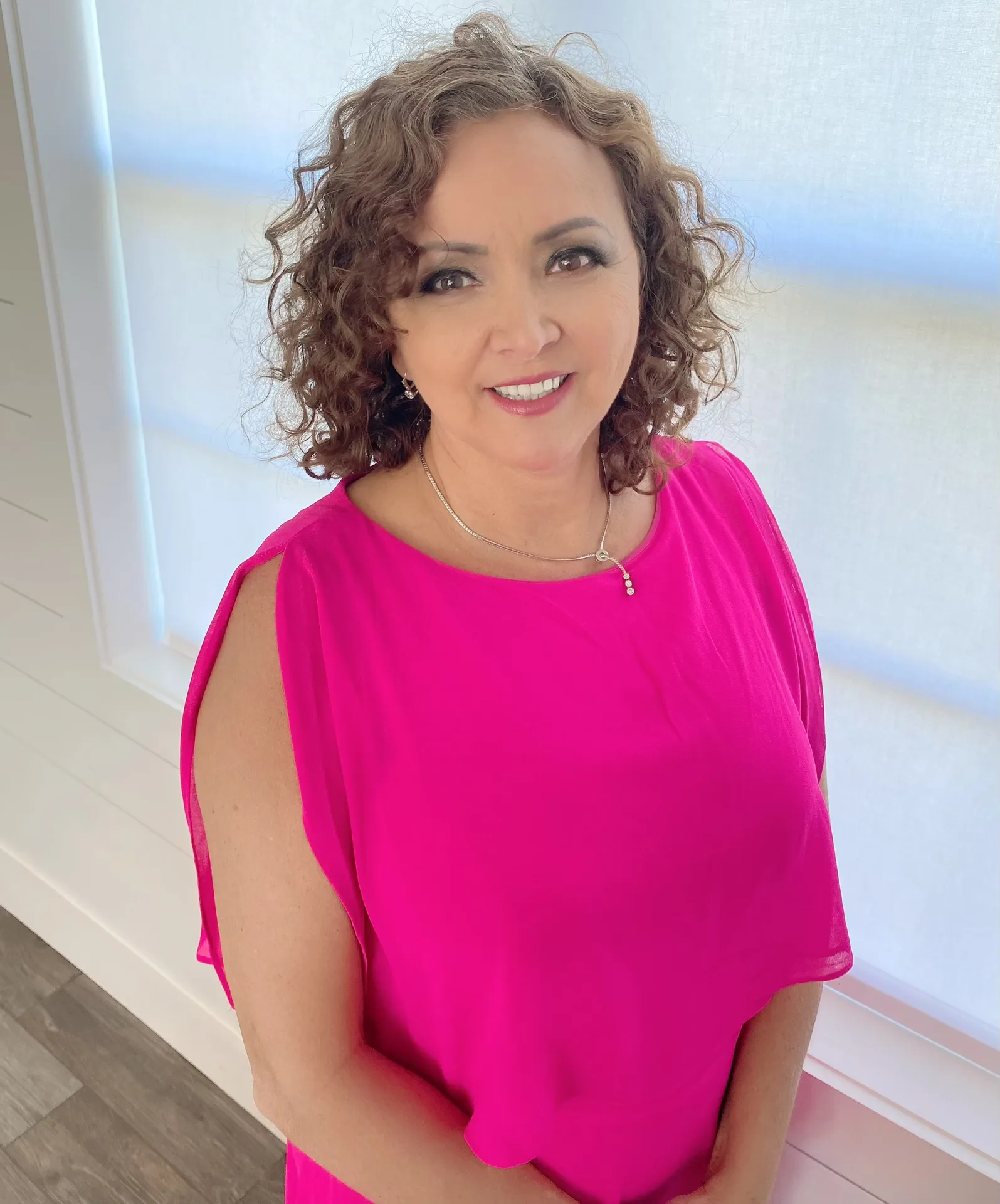
About the Author
Lili Whittington, MBA is a Broker Associate with Soundings LLC in The Villages, FL. With over 20 years of experience and 450+ homes sold, she specializes in luxury homes, retirement relocation, and senior living throughout Marion, Sumter, and Lake counties. She holds designations including CLHMS, SRES, MRP, ABR, SFR, and CIPS, and is bilingual in English and Spanish.
Ready to make the move from the Northeast?
Lili Whittington, MBA · Broker Associate · Soundings LLC
Licensed in Florida · BK3090328
Call or text: 954-235-4766
Email: Liliana.whittington@soundingsrealestate.com
Schedule a Consultation